
Field Note 005 / Mount Kilimanjaro, Tanzania
Mount Kilimanjaro
Five days on the Marangu Route
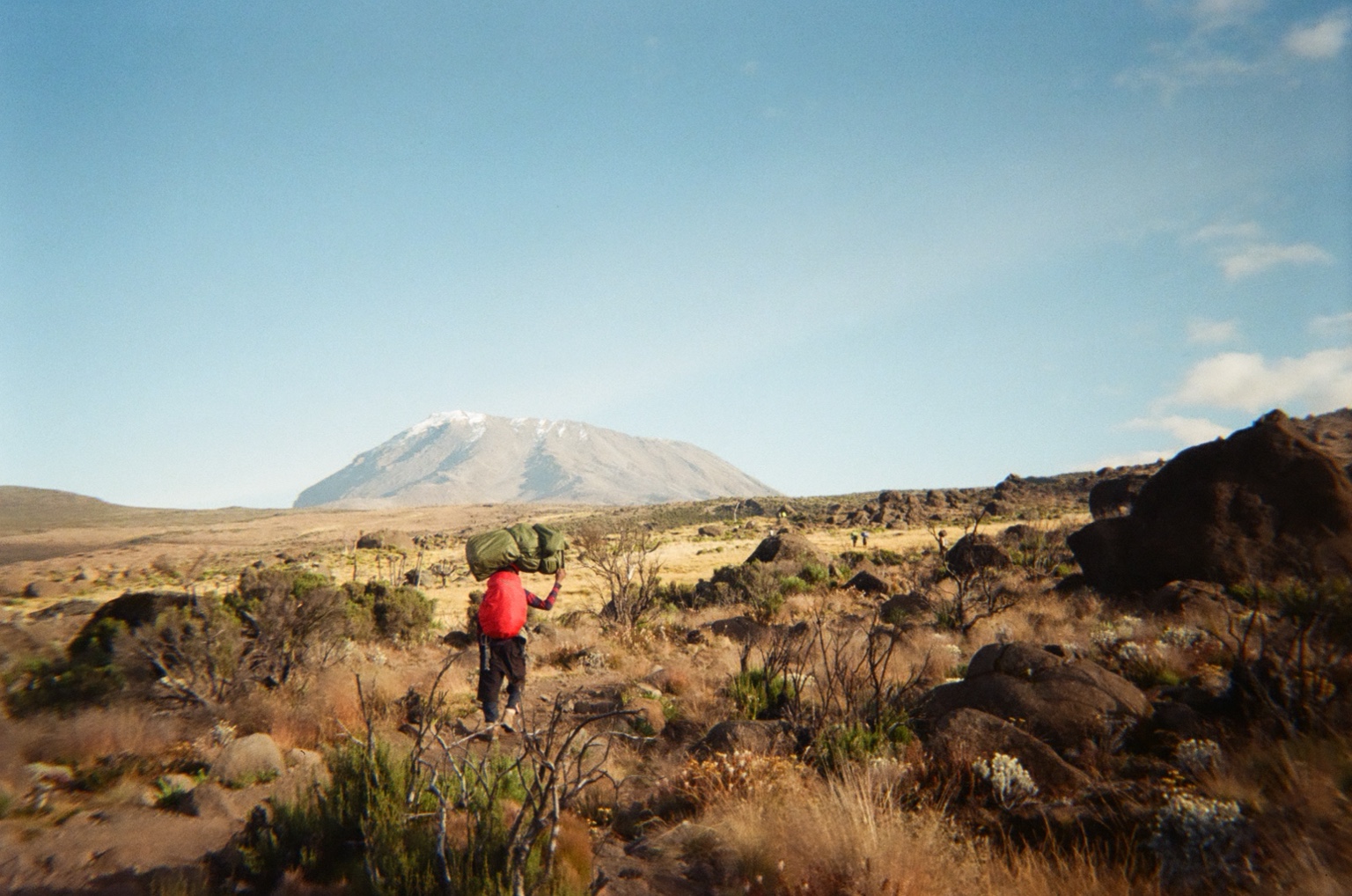
The mountain first appears as a distant form above the plateau. On the Marangu Route, the approach is gradual: forest gives way to heath and moorland, then to increasingly open volcanic ground. The summit remains ahead, but the landscape around it changes continuously.
This Field Note records five days on Kilimanjaro, from 1 to 5 July 2024, with Guglielmo Araldi, Umberto Pernice, Tommaso Bruno and Sam Thompson. Approximately three and a half days were spent ascending and one and a half descending. The photographs follow that movement rather than reconstructing the mountain as a map.
A mountain in layers
Kilimanjaro is an isolated volcanic massif in northern Tanzania. Its three principal volcanic centres are Shira, Mawenzi and Kibo; Uhuru Peak, on Kibo, reaches 5,895 metres and is the highest point in Africa.
The Marangu Route approaches Kibo from the southeast. Altitude is registered not only in metres but in the disappearance of vegetation. The lower mountain is enclosed and green. Higher up, the trail opens onto heath and moorland; above that, the surface becomes increasingly spare, exposed and mineral.
In the photographs, people provide the measure. Porters move through the same terrain carrying loads and maintaining the expedition's rhythm. Walkers pause on rock, disappear into mist and re-emerge against a much larger horizon.
- Place
- Mount Kilimanjaro, Tanzania
- Field dates
- 1–5 July 2024
- Route
- Marangu Route
- Summit
- Uhuru Peak / 5,895 m
- Ascent / descent
- 3.5 days / 1.5 days
- Record
- Photography / expedition
The hours before light
Near the top, the expedition enters a different scale of time. Darkness reduces the mountain to the small area reached by a headlamp. The ground is volcanic and loose; distance is difficult to read. Progress becomes a sequence of short sections rather than a view towards the summit.
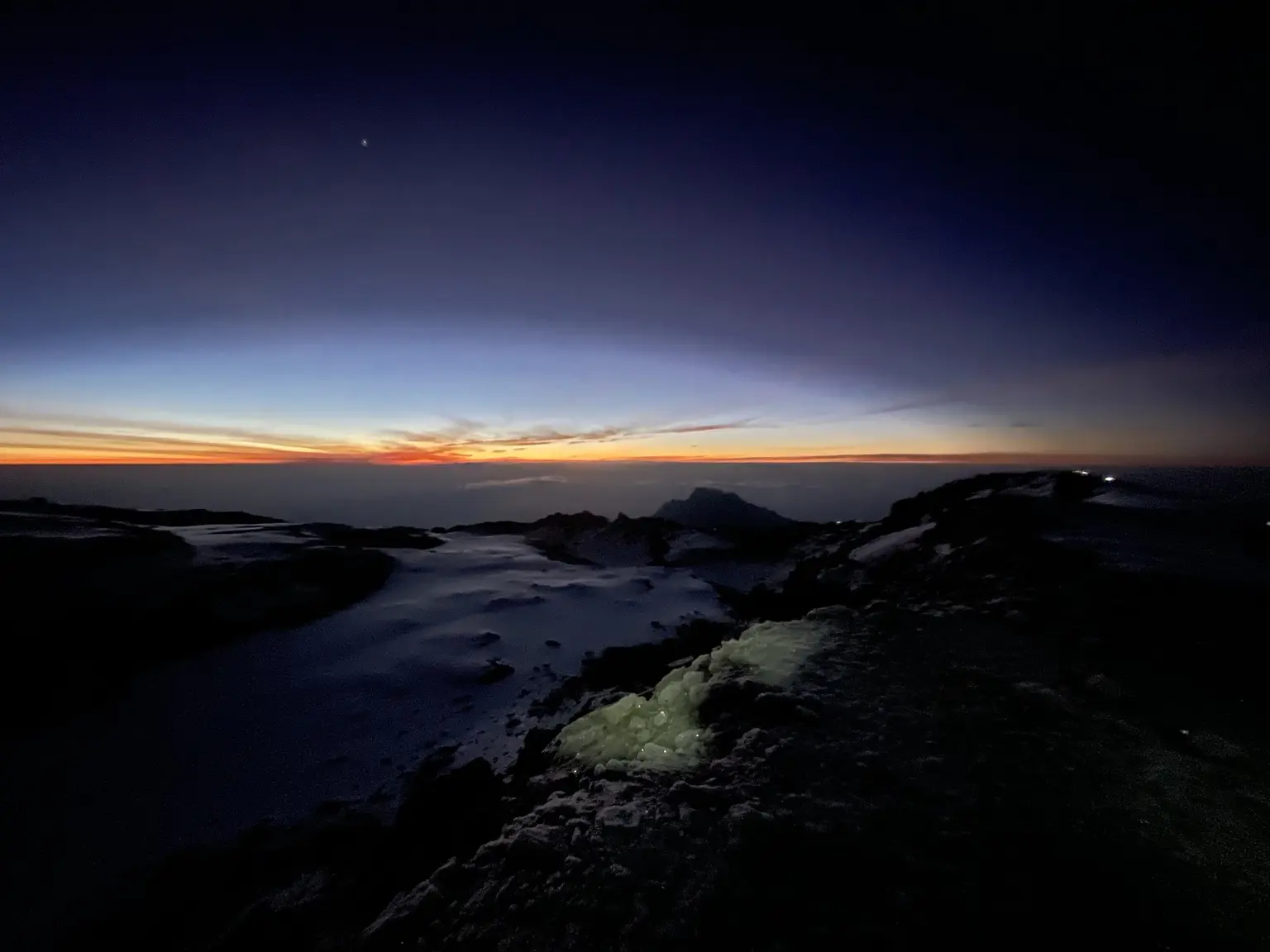
Then the horizon begins to separate from the night. The upper mountain appears in fragments: rock, ice, the edge of the crater and a band of colour beyond it. The change is rapid, but after hours in darkness even the first light feels spatial.
Uhuru Peak
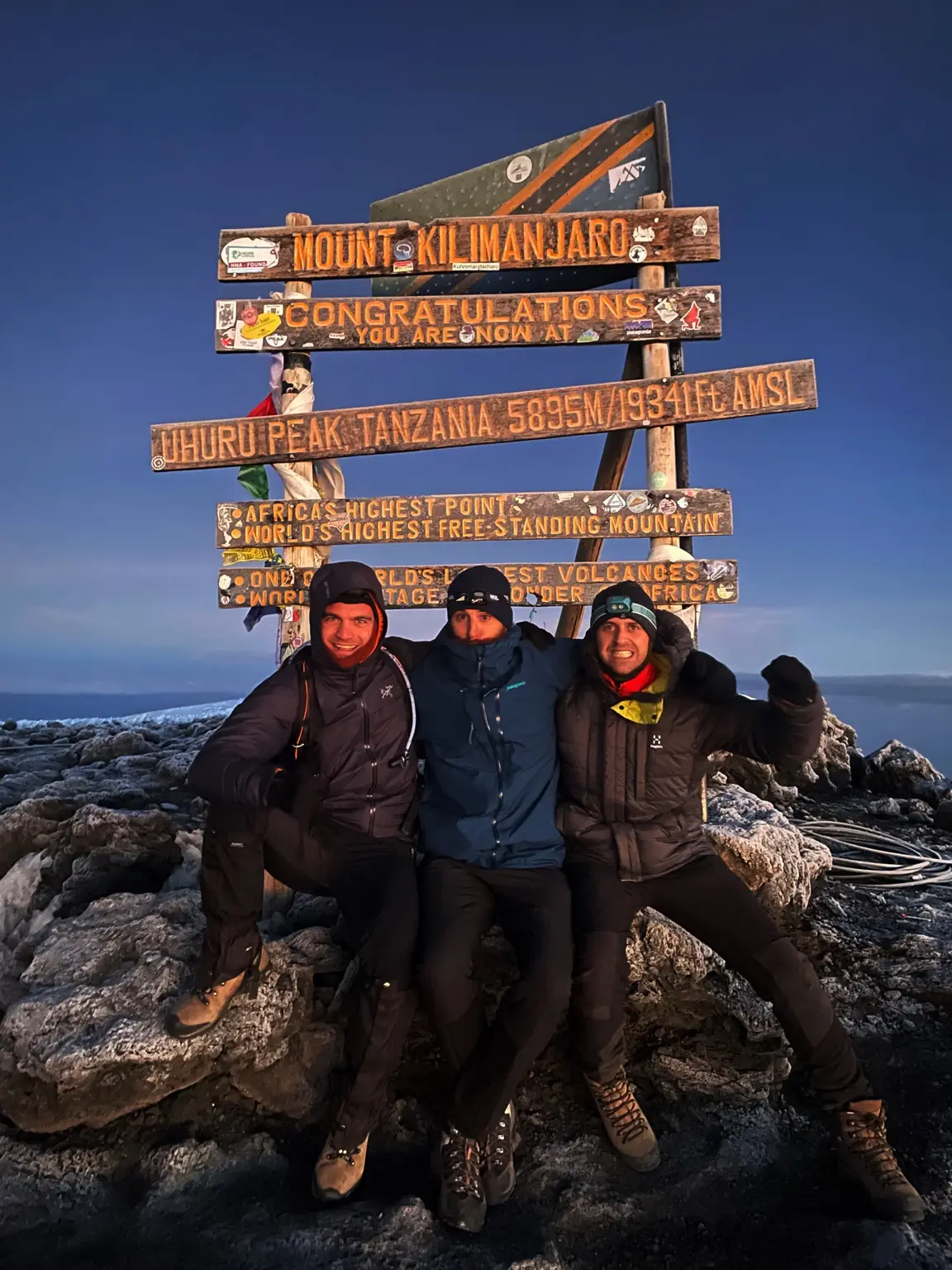
At 5,895 metres, Uhuru Peak is the end of the ascent but only the midpoint of the physical journey. The summit photograph is direct: a sign, figures, heavy clothing, rock and the blue of early morning. It fixes a precise altitude after several days of gradual change.
The descent compresses the mountain. Terrain that took days to cross on the way up is passed again in roughly a day and a half. The sequence reverses: volcanic ground gives way to vegetation, the air becomes denser, and the summit cone recedes until it is once again a distant form.
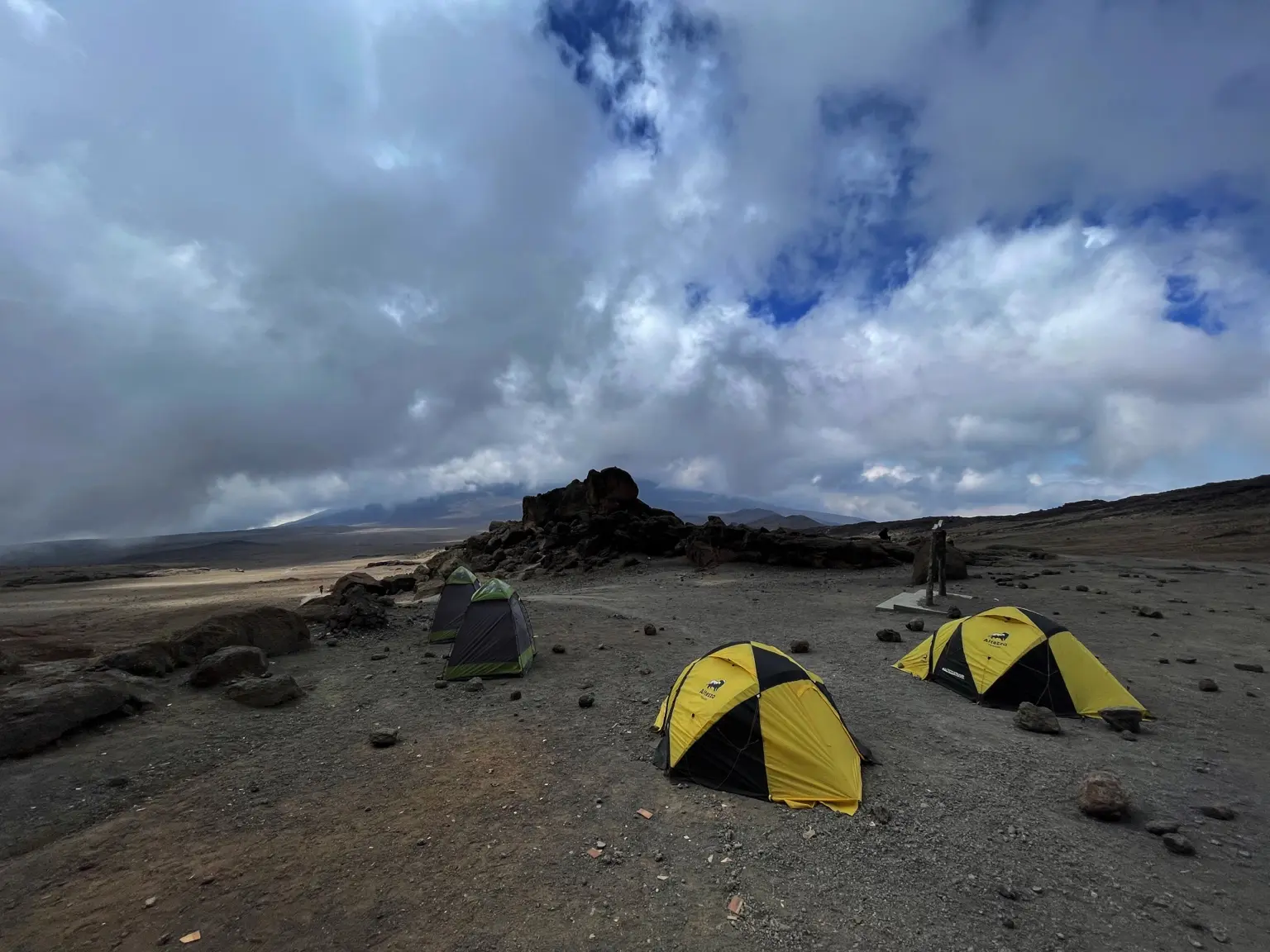
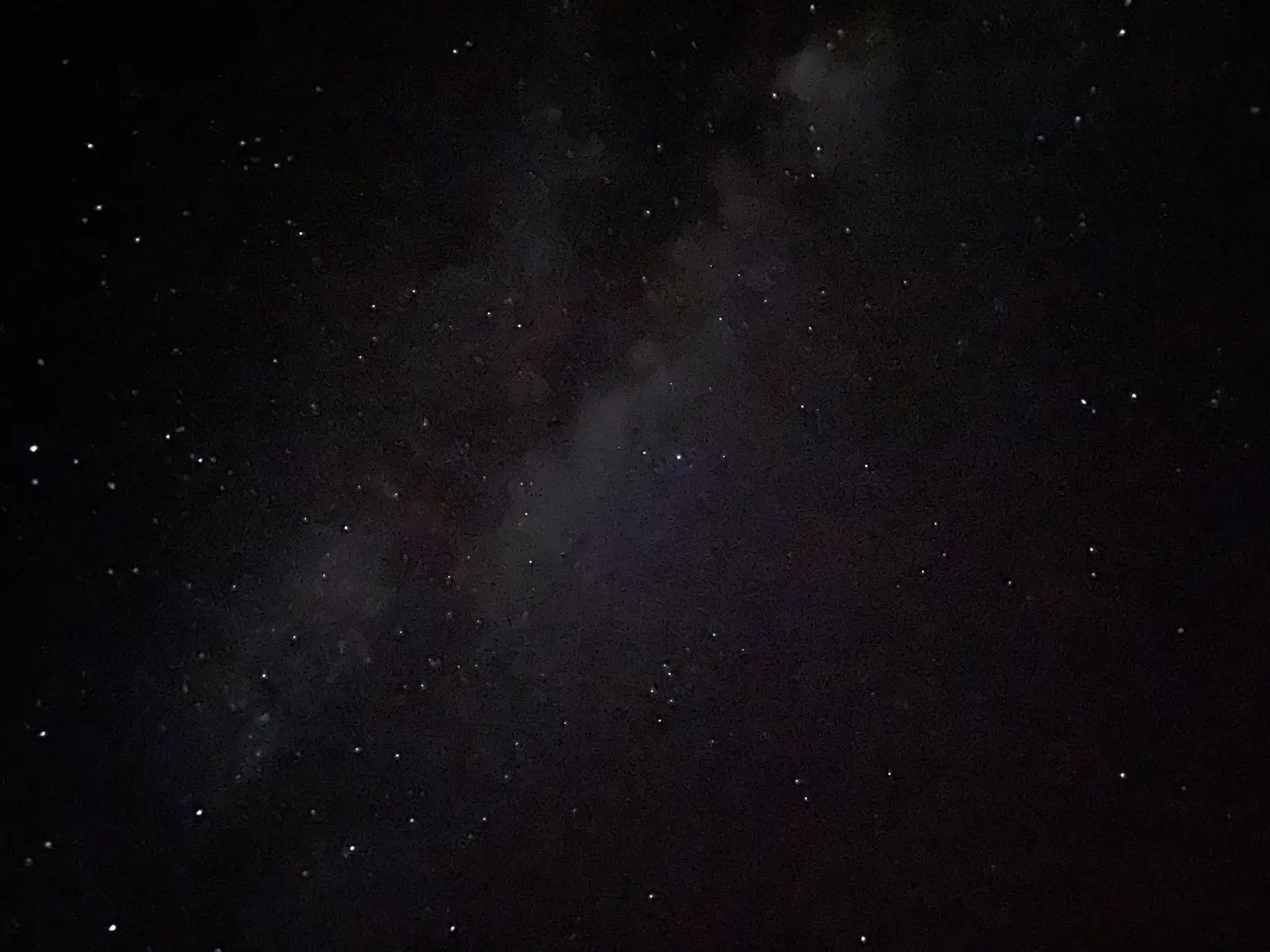
What remains is not a single summit image but the transitions around it — the porter beneath the cone, the tents under cloud, the night sky, the first light and the return down the same mountain.
Expedition
Guglielmo Araldi
Umberto Pernice
Tommaso Bruno
Sam Thompson
Mount Kilimanjaro, Tanzania
1–5 July 2024.
Photographic archive
The Field Witness Society
© 2026 The Field Witness Society.
Editorial note
Field dates, route, duration and expedition participants supplied by Tommaso Bruno. Photographs arranged as an editorial sequence.